Final term exams are the biggest part of your grade at Virtual University. The syllabus is long. The time is short. And most students feel lost about where to start.
Here is the good news. Past papers can fix most of this problem. Many VU students say that a big part of their paper felt familiar because they practiced past papers. Some even say most questions repeat in one form or another.
But there is a right way and a wrong way to use them. Just reading past papers is the wrong way. In this guide, you will learn the right way, step by step.
What Are VU Past Papers?
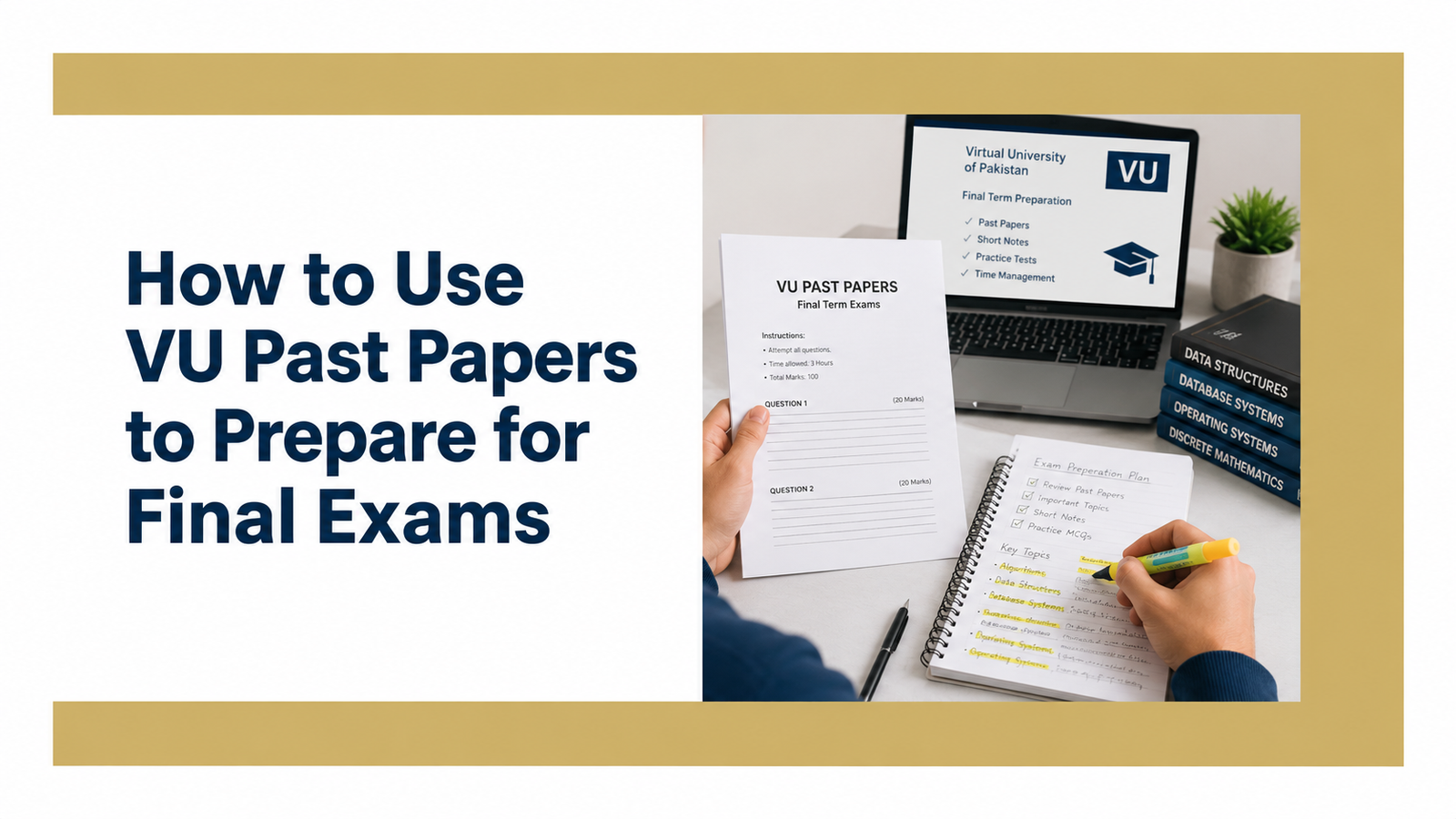
VU past papers are real exam questions from previous semesters. They include midterm and final term papers of almost every subject. Students collect and share these papers every semester.
Some famous collections are shared by senior students. The files by Moaaz and Waqar Siddhu are the most popular ones in the VU community. Moaaz files are known for solved MCQs. Waqar Siddhu files are known for solved subjective questions.
Why Past Papers Matter So Much in VU
The VU final term paper has a fixed style. It has MCQs, short questions, and long questions. This pattern does not change much every semester.
That is why past papers are so powerful. They show you:
- The type of questions that come in exams
- The topics that repeat again and again
- The way questions are worded
- How much time each section needs
When you know all this before the exam, you walk in with confidence. Nothing feels new to you.
Step by Step: How to Prepare With Past Papers
Now let us get practical. Follow these steps for each subject.
Step 1: Finish Your Handouts First
This is the most important rule. Past papers are not a shortcut to skip your handouts. VU exams come from handouts. Almost every MCQ and long question is based on them.
So first, read your handouts and watch the lectures for topics you find hard. Then move to past papers. Past papers work best as a revision tool, not as your only study source.
Step 2: Collect Papers for Your Subject
Gather past papers of your subject from the last few semesters. Try to get at least 3 to 5 papers. Get both solved and unsolved versions if you can. Solved papers help you check your answers. Unsolved papers are best for practice.
Step 3: Solve One Paper Like a Real Exam
Pick one past paper. Set a timer for the same duration as your real exam. Now solve the full paper without opening your handouts.
This does two things. It tests your real preparation. And it trains your speed. Many students know the answers but run out of time in exams. Timed practice fixes that.
Step 4: Check Your Answers and Mark Weak Areas
After solving, check your answers from the solved files or your handouts. Make a list of the questions you got wrong.
These wrong answers are gold. They show you exactly which topics are weak. Now go back to your handouts and revise only those topics. This saves hours of blind revision.
Step 5: Spot the Repeated Questions
While going through 3 to 5 past papers, you will notice something. Some questions appear again and again. Some topics come in almost every paper.
Note these repeated questions in a separate list. Prepare them very well. There is a strong chance you will see them in your exam too.
Step 6: Practice MCQs Daily
The MCQ section can raise your marks fast. In the last week before exams, practice MCQs from past papers every day. Even 30 minutes daily makes a big difference.
Do not just memorize the answers. Understand why the answer is correct. VU sometimes changes the wording of MCQs. If you understand the concept, you will still get it right.
Step 7: Do Not Ignore Long Questions
Many students only prepare MCQs from past papers. This is a mistake. Long and short questions carry major marks in final term.
Practice writing the answers of subjective questions from past papers. Writing them once is better than reading them five times. It helps you remember the points in the exam hall.
A Simple Weekly Plan
If your exams are near, here is an easy plan you can follow.
- First, revise handouts of one subject
- Then solve one past paper of that subject with a timer
- Check answers and revise weak topics
- Note repeated questions
- Repeat this cycle for every subject
- In the last 2 days, only revise your weak topics list and repeated questions list
This plan keeps your preparation focused. You never waste time on things you already know.
Common Mistakes to Avoid
Keep these warnings in mind.
Do not rely only on past papers. Papers change a little every semester. Handouts are your main source. Past papers are your practice tool.
Do not just read solved papers. Reading feels like studying but it is not. Always solve first, then check.
Do not start one night before. Past papers work best when you use them for at least a week before exams.
Do not skip the reference. In subjective answers, try to remember the lesson number or concept name. It helps you write more accurate answers.
Where to Find VU Past Papers
You can find VU past papers in student groups and on educational websites. Senior students share their files after every exam season. The Moaaz and Waqar Siddhu files are shared widely in the VU community.
We are also building a complete collection of past papers here on Past Papers Hub. Our goal is to give you every paper in one clean place, so you do not waste time searching in scattered groups.
Final Words
Past papers are the smartest tool a VU student has. They show you the exam before the exam. Use them the right way. Finish your handouts first. Solve papers with a timer. Fix your weak areas. And prepare the repeated questions well.
Do this for every subject and you will enter your final term exam with full confidence. Good luck with your preparation.